📢 Mains Answer Writing Programme - Coming Soon•
📝 Email - contact@civilmentor.in•
📚 Download NCERT Books•
🎯 Daily Targets & Accountability•
🚀 Join Our Telegram Community
📢 Mains Answer Writing Programme - Coming Soon•
📝 Email - contact@civilmentor.in•
📚 Download NCERT Books•
🎯 Daily Targets & Accountability•
🚀 Join Our Telegram Community
UPSC CSE Beginner’s Guide
Civil Services Examination (CSE) is India’s premier competitive recruitment process for top administrative positions like the IAS, IPS, and IFS, and other A Grade government jobs.
Eligibility Criteria
Nationality: Indian citizen
Age Limit: 21 to 32 years (general category), with relaxations for reserved categories
Educational Qualification: Graduate from a recognized university
Around 10–12 lakh candidates apply each year. Only a few hundred ultimately secure top services like IAS, IPS, and IFS, making it one of the toughest examinations in India.
Exam Stages:
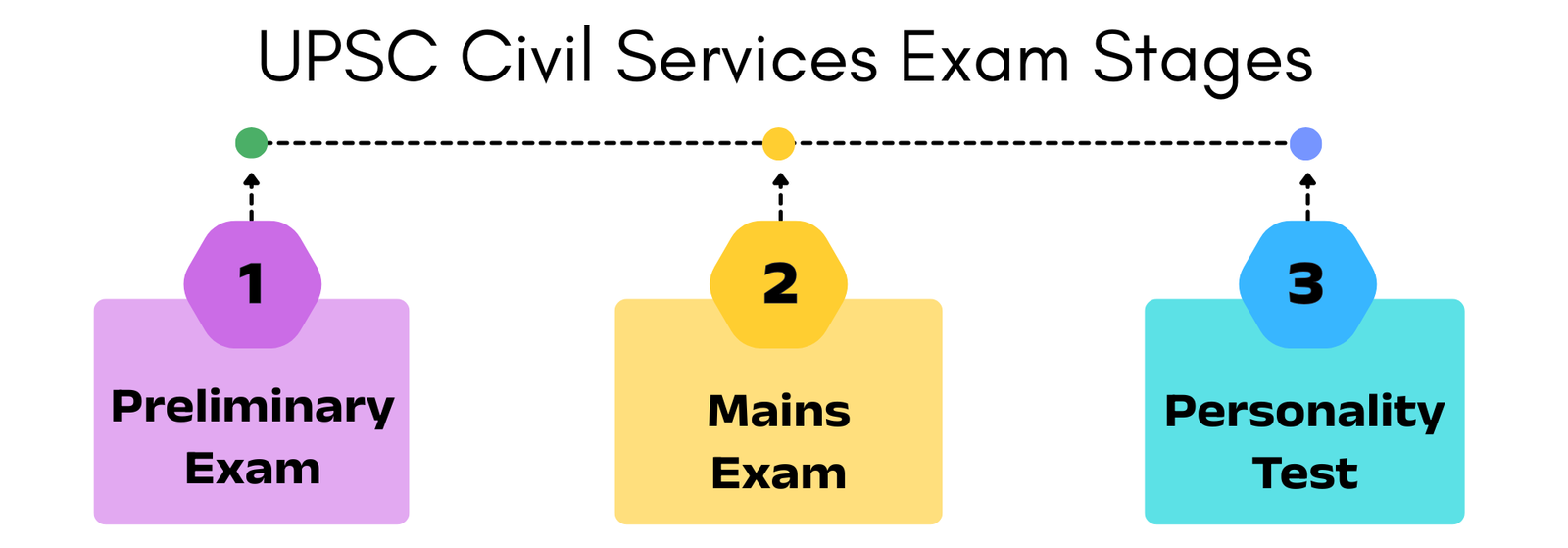
The UPSC CSE consists of three stages:
1. Preliminary Exam (May) –
Objective type (GS Paper I and CSAT)
Paper I – General Studies:
100 Questions
200 Marks
Marks considered for qualifying to Mains
Paper II – CSAT:
80 Questions
200 Marks
Qualifying in nature
Minimum 33% (66 marks) required
Important: Marks obtained in the Preliminary Examination are not included in the final merit list. They are only used to shortlist candidates for the Main Examination.
2. Main Exam (August) –
Descriptive papers including Essay, GS, and optional subjects
3. Personality Test/Interview (Jan-March) –
Conducted at UPSC office in Delhi.
👉 Preparation Strategy: Study Plan & Tips
Learn how to prepare for UPSC CSE with effective strategies, time management tips, and daily routines.
👉 UPSC CSE Syllabus 2026-27: Prelims & Mains Detailed
Get the complete UPSC syllabus for IAS prelims and mains – paper-wise breakdown, subjects, and topics.
Roles & Responsibilities of an IAS Officer:
IAS officers hold key administrative positions across India. Their responsibilities include:
- Implementing government policies
- Managing daily administrative affairs
- Law and order enforcement
- Revenue collection
- Crisis management (natural disasters, health emergencies, etc.)
- Developmental work in their assigned areas
They start as Sub-Divisional Magistrates (SDMs) and can rise to the top as Cabinet Secretary, the highest-ranking civil servant in India.